- Daily Update from Securities Docket
- Posts
- U.S. Attorney Jay Clayton Expects Cases Related to Trading in Prediction Markets
U.S. Attorney Jay Clayton Expects Cases Related to Trading in Prediction Markets
Plus more news from yesterday's Securities Enforcement Forum New York!

Bruce Carton
February 06, 2026

Good morning! Here’s what’s up.

Clips ✂️
Wall Street’s Top Cop Expects Enforcement on Prediction Markets
Wall Street’s top cop expects regulators to take actions tied to prediction markets following a surge in trading on the platforms over the past year, saying that simply making bets outside of traditional spaces “doesn’t insulate you from fraud.”
Manhattan US Attorney Jay Clayton made the comments Thursday during a speech at the Securities Enforcement Forum in New York, telling the audience that prediction markets are “an area that I am looking at.”
“What is the applicable law? Let’s say I have a big stock position,” Clayton said. “The stock’s trading at $130, there’s a prediction market that pays if the stock goes below $100. Is that an out of the money put option? It sure looks like it. Right? You wouldn’t advise someone to sell that as a non-security.”
👉 Notably, Kalshi yesterday announced “a major expansion of its market surveillance and enforcement framework” that includes an independent surveillance advisory committee and new trading surveillance partnerships with Solidus Labs and the Director of the Wharton Forensic Analytics Lab, Daniel Taylor.
Kalshi also stated that one of its lawyer, Robert DeNault, had been named to the role of “Head of Enforcement” and that DeNault will “work to prevent and detect instances of insider trading and market manipulation.”
In his Money Stuff column, Matt Levine wrote that “I just feel like the first, you know, 20 people to get arrested for insider trading on Kalshi will be very surprised. ‘Wait, was I not allowed to do that? I thought that was the whole point.’”
US attorney says office will not prosecute companies that cooperate in criminal probes
Federal prosecutors plan to increase incentives for companies that cooperate during criminal investigations, including promises not to prosecute them, the U.S. Attorney in Manhattan said on Thursday.
Jay Clayton’s remarks at an industry conference come as the Justice Department is scaling back corporate crime enforcement and refocusing on immigration and drug cases under the Trump administration.
Companies need to know there is a specific benefit to cooperating with U.S. prosecutors in rooting out wrongdoers, Clayton said at the Securities Enforcement Forum in New York.
👉 U.S. Attorney Jay Clayton added that “our approach is going to be: let’s get an NPA signed as quickly as possible that calls for continued cooperation.” His remarks came as part of a Keynote Q&A at Securities Enforcement Forum New York moderated by Steve Peikin of Sullivan & Cromwell.
The Reuters article above by Chris Prentice observes that on a different panel at Securities Enforcement Forum New York, Andrew Thomas, Co-Chief of the SDNY’s Securities and Commodities Fraud Task Force, stated that the initiative will involve an initial, conditional agreement in which prosecutors decline to prosecute the firms.
The full videos from all of the panels from the event will be available next week on Securities Docket’s YouTube channel!
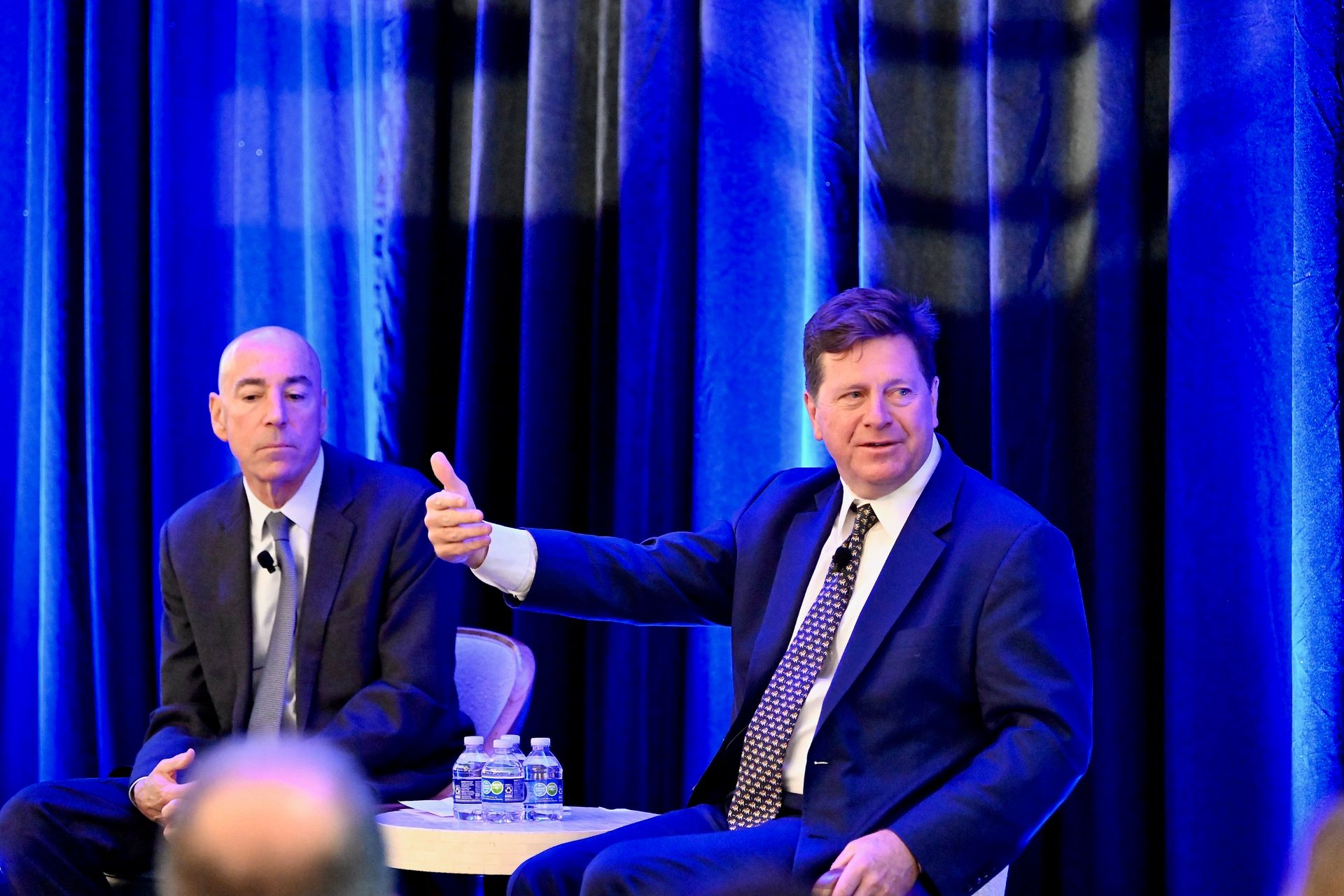
U.S. Attorney Jay Clayton and Steve Peikin at Securities Enforcement Forum New York, 2/5/26
Crypto Spurs SEC–CFTC Cooperation, But Regulatory Lines Remain Blurry
The two agencies have also sparred over jurisdiction of crypto derivatives.
The SEC and CFTC “didn’t really get into specifics on what [the collaboration] really means and what’s going to come from it,” Hendricks said.
Both agencies have different regulatory frameworks for the markets they oversee and it remains unclear which framework is more appropriate for crypto, said former SEC Division of Enforcement senior counsel Rebecca Fike.
“Making something new is hard; making something new by committee is even harder,” she said. “I know what the problem is. I don’t know what the solution is.”
In Fike’s view, any jurisdictional conflict between the market regulators arose out of a genuine belief they were the right agency to handle any particular issue.
Hartman, however, said she has experienced instances in which the agencies jockey for position on certain enforcement issues and open inconsistent parallel investigations that became onerous, which was a problem in previous administrations.
The commissions may now be getting direction from the Trump White House in how they should approach operating together, since this administration does not believe that an executive agency can be independent of the president, said former CFTC general counsel Rob Schwartz.
SEC v. Musk: Federal Court Addresses Constitutionality of Section 13(d)
The D.C. federal district court recently addressed Elon Musk’s motion to dismiss the highly anticipated SEC lawsuit regarding Musk’s publicly scrutinized Twitter stock beneficial ownership reporting back in 2022. Musk had disclosed his ownership stake in Twitter on a Schedule 13G, more than 20 days after crossing the 5% threshold, and one day before filing a 13D reporting that he’d accepted a seat on Twitter’s Board.
In the motion to dismiss, Musk argued:
– Section 13(d) unconstitutionally forces speech
– Rule 13d-1 is unconstitutionally vague
– The SEC is selectively enforcing Section 13(d)
– SEC Commissioners are unconstitutionally protected from removal
The court found that “the balance Congress struck in Section 13(d) does not violate the First Amendment” and Rule 13d-1 is not unconstitutionally vague. It also found that Musk hadn’t presented enough evidence (for now) for a “selective enforcement” defense….
👉 The court’s opinion is here.