- Daily Update from Securities Docket
- Posts
- SEC Names David Woodcock as Director of Enforcement Effective May 4
SEC Names David Woodcock as Director of Enforcement Effective May 4
Plus SEC Chairman Atkins says states, not the SEC, should regulate matters of corporate governance.
Bruce Carton
April 09, 2026

SPONSORED BY

Good morning! Here’s what’s up.

Clips ✂️
SEC Appoints David Woodcock as Director of the Division of Enforcement
The Securities and Exchange Commission today announced that David Woodcock has been appointed Director of the Division of Enforcement, effective May 4, 2026. Mr. Woodcock is currently a partner in the Dallas and Washington, D.C. offices of Gibson, Dunn & Crutcher LLP, where he serves as chair of the firm’s Securities Enforcement Practice Group. Sam Waldon will continue to serve as Acting Director of the Enforcement Division until May 4.
“The Division of Enforcement has undergone a significant course correction, restoring Congressional intent by prioritizing cases that provide meaningful investor protection and strengthen market integrity,” said SEC Chairman Paul S. Atkins. “I thank Sam for his steadfast commitment to serve in key senior roles at the SEC and am grateful for his wise counsel and leadership.”
Chairman Atkins continued, “I am incredibly pleased to have David rejoin the SEC at this critical time, as we continue to focus on the types of misconduct that inflict the greatest harm to investors. With experience as a senior officer at the SEC, global law firm partner, a certified public accountant, and senior in-house corporate attorney, David is a foremost expert in all relevant facets of securities law and has deep institutional knowledge. I look forward to him leading our 1,000+ team of talented enforcement investigators, trial attorneys, accountants, and other professionals.”
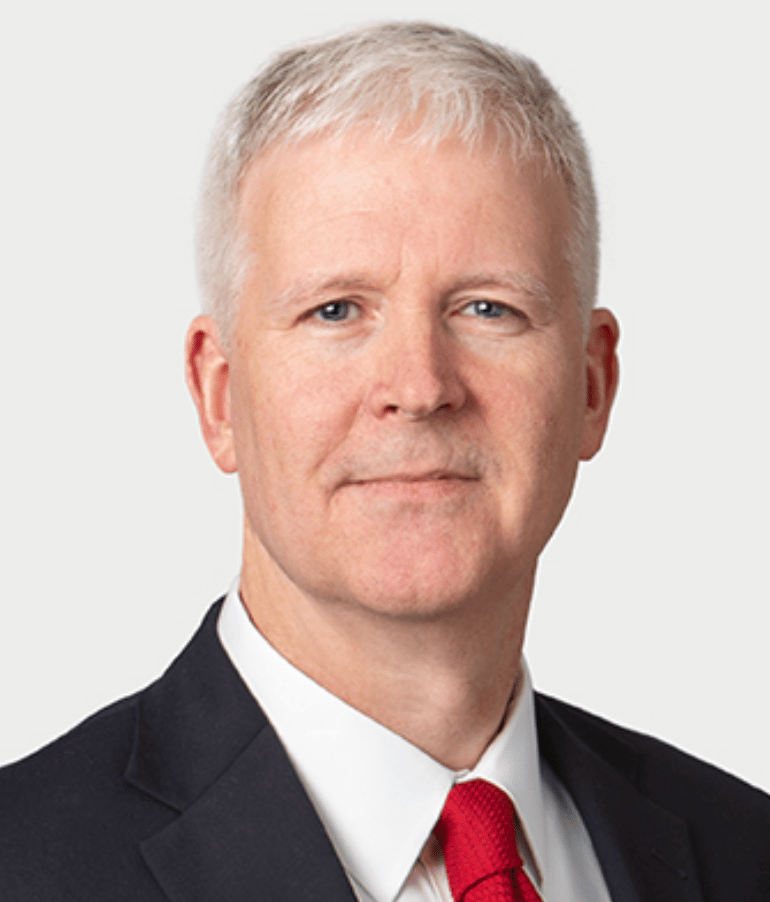
Woodcock’s appointment as the next Director of Enforcement received a lot of praise from his former colleagues at the SEC in Fort Worth. Rebecca Fike of Reed Smith described Woodcock as “a good, smart, excellent lawyer who cares about the mission of the SEC.”
Jessica Magee of Holland & Knight told Reuters that “David will strike a good balance between understanding and supporting enforcement staff, and also holding them accountable to ensuring they are opening and working matters worthy of investigation. I think he'll be a stabilizing force."
Nobody asked me but I agree 100%. David Woodcock is an inspired choice as the next Director of Enforcement. Bravo to Chairman Atkins on this selection and congratulations to David Woodcock!
SEC chair says US states should lead on policing corporate behaviour
The head of the US Securities and Exchange Commission has said federal regulators should take a back seat to states in policing executive conduct, underscoring the administration’s stance that light-touch regulation will unleash economic growth.
The comments by SEC chair Paul Atkins are the latest indication that federal authorities wish to retreat from aggressive legal and regulatory enforcement, which they have maintained is not ultimately useful to investors.
Politically conservative states, most notably Texas, have been setting themselves up as business-friendly alternatives to traditional corporate and financial powerhouses such as Delaware and New York.
“[We] are focused on ensuring that states, and not the SEC, regulate matters of corporate governance,” Atkins told a conference on Monday in Miami organised by the Texas Stock Exchange, which is set to launch this year, in comments posted on the SEC’s website.
“Over time, the agency has used its disclosure authority to attempt to indirectly establish governance standards that state corporate law should and can address. We must stay in our lane as a disclosure agency and not be a merit regulator,” he added.
Thomas Peterffy Says There Should Be No Bans on Insider Trading
Thomas Peterffy, the billionaire founder and chairman of Interactive Brokers Group Inc., has an answer to the insider-trading concerns dogging prediction markets: stop trying to prevent it — for the good of society.
Investors everywhere have been exposed to such shenanigans since the dawn of markets. Not only is preventing it futile, he says, assets get to the correct price faster when people do it.
“I’m in favor of not having any rules against insider trading. I would like all the information out there as soon as it’s available,” he said about all markets — not just predictions-based ones — in an interview on Bloomberg’s Odd Lots podcast. “Because look, as a society, we are better off knowing as soon as possible anything that is knowable.”
👉 POLL:
Would we be better off as a society if there were no rules against insider trading? |
The SEC’s Budget Request for FY 2027
Between a budget proposal and a belated reporting of annual enforcement results for the period ending 9/30/25, it’s been an active week of reporting on exam and enforcement activity at the U.S. Securities and Exchange Commission. As a former regulator, there were a couple of things that stood out to me in this budget request. […]
What really caught my eye as a former examiner was Performance Goal 3 on page 49 of the budget request. For many years, Performance Goal 3 of the budget request has been where the SEC reports and estimates what percentage of all registered investment advisers it has or will examine in a given year. For the current fiscal year, the SEC estimates that only 9% of investment advisers will be examined. The figure is expected to rise to 11% next year, with the discrepancy from flat staffing expectations probably explained by some combination of the lengthy shutdown to start this year and efficiencies to be gained by the exam program’s adoption of AI to conduct exams. But whether its 9% or 11%, the chart shows a coverage rate of about 15% going back to 2020. And if you look at the same performance goal in prior budget requests, the coverage rate has been about 15% every year for the last decade. In sum, we’ve officially started a period of reduced exam coverage compared to the recent Clayton and Gensler administrations. If past is prologue, this will continue until the earlier of a financial crisis or a change in administration that will precipitate renewed increases in the SEC’s budget.
👉 Post on LinkedIn by Robert Baker, a former Assistant Director in the SEC’s Division of Examinations (now with ACA Group).
So This Is How The SEC Dies . . .
Yesterday, seven months late, the SEC released its annual enforcement statistics. As expected, the report did not disappoint — if you were rooting for the collapse of American securities regulation.
Chairman Paul Atkins used the occasion not to report results, but to rewrite the definition of success itself: the cases we didn’t bring, the investigations we closed, the penalties we chose not to seek. By that standard, an SEC that brought zero cases would be the most successful in history. Welcome to the Atkins era — where doing nothing is the new doing everything. 1984 Redux.
Let’s be precise about what happened yesterday. For the first time in SEC history, the annual enforcement report functioned as a political manifesto — replete with attacks on the prior administration, editorial spin, and an extraordinary request to be credited for 1,095 investigations the agency chose to abandon. That’s not transparency. That’s propaganda.
Adam Back Denies He Is Satoshi Nakamoto in Response to Times Investigation
The British computer scientist Adam Back said on Wednesday that he is not the pseudonymous inventor of Bitcoin known as Satoshi Nakamoto, after a New York Times investigation presented evidence that he is.
“I’m not satoshi,” Mr. Back said on the social media platform X on Wednesday. He added that he is merely one of a number of developers who came “so close yet so far” to building something like Bitcoin.
The true identity of the creator of the world’s first cryptocurrency has remained hidden for 17 years. The Times’s investigation, led by reporter John Carreyrou, showed that Mr. Back had, in a series of obscure emails, outlined almost every feature of Bitcoin a decade before Satoshi did. It showed that during Satoshi’s two and a half years posting frequently online, Mr. Back largely disappeared from forums discussing Bitcoin, only to reappear soon after Satoshi famously vanished in 2011. And it found striking similarities between Mr. Back’s and Satoshi’s online posts and emails.
👉 In his Money Stuff column, Matt Levine notes that Back is now the CEO of Bitcoin Standard Treasury Company, a digital asset treasury company planning to go public by merger with a special-purpose acquisition company. As Carreyrou wrote in his report,
“As chief executive of the merged company, Mr. Back was required under U.S. securities law to disclose any information that was material to its investors. A secret stash of 1.1 million coins that could crash the Bitcoin market if it were suddenly sold, for example, would probably be considered material.”
Levine adds that “everything, I often say around here, is securities fraud. It would be satisfying if being Satoshi Nakamoto is also securities fraud.”
SPONSORED BY

Securities Enforcement Forum West 2026 is set for Thursday, May 21, 2026 at the historic Palace Hotel in San Francisco! Join us in person or tune in virtually to hear from nearly 50 luminaries in the securities enforcement field—including senior government officials, in-house counsel from major corporations, and lawyers and consultants from the best firms and in the world. In addition, Securities Enforcement Forum West will feature a cant-miss Keynote Q&A with Coinbase Chief Legal Officer Paul Grewal, moderated by Peter Altman of Akin.
👉 Daily Update readers receive a 25% registration discount (regular registration fee is $1,500 for in person and $750 for virtual). Please use these codes:
In-person: UPDATE101W25
Virtual: UPDATE101V25
Please register here. See you May 21 in San Francisco!!!